

Why Choose Floor Grating for Industrial Applications?

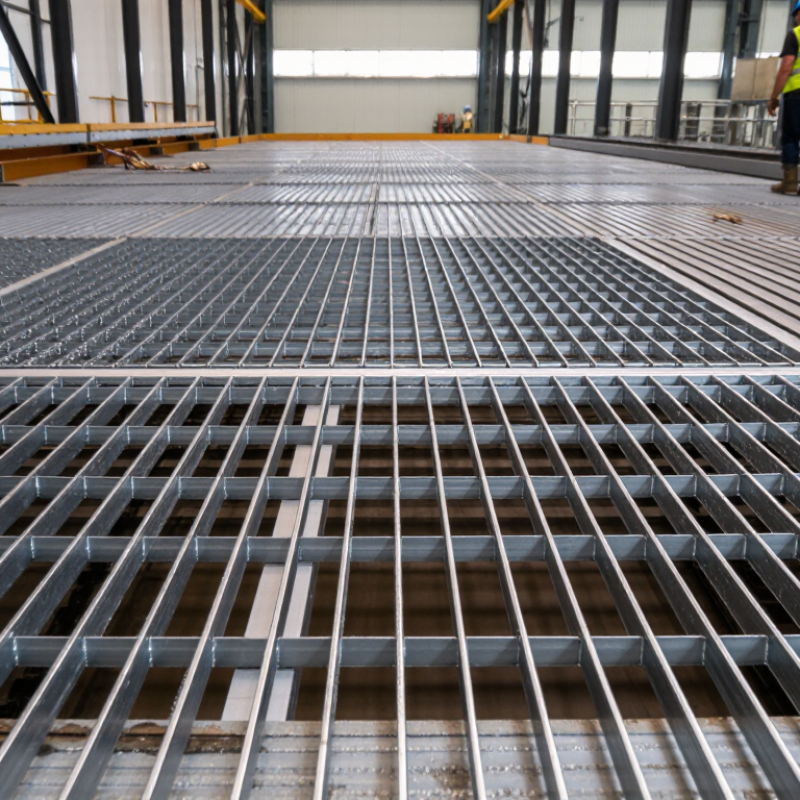
Why Choose Floor Grating for Industrial Applications? The answer begins with practical site demands. In factories, platforms, walkways, and maintenance areas, surfaces must support people, tools, and repeated traffic. Floor Grating offers an open structure that allows water, oil, dust, and small debris to pass through. This can reduce pooling around equipment and improve underfoot visibility.

From experience on industrial projects, the best selection depends on more than appearance. Engineers review span length, load ratings, panel dimensions, surface finish, and support spacing before approval. Serrated bars can improve traction when boots are wet or contaminated. Galvanized steel suits many general environments, while stainless steel or reinforced alternatives may perform better near chemicals or persistent moisture. Every choice needs evidence.

Small details matter.

A properly specified Floor Grating can simplify cleaning and provide access to machinery beneath elevated platforms. Its lighter open design may also reduce handling effort during installation. However, it is not automatically the safest or most economical option. Incorrect bar spacing, weak supports, or poor fastening can create hazards and expensive repairs. Even a corrosion-resistant surface requires inspection, especially near washdown zones and coastal facilities.

Reliable decisions combine manufacturer data, competent engineering review, and observations from actual operating conditions. Teams should confirm local safety requirements and maintain a documented inspection schedule. This article examines the practical reasons industries choose Floor Grating, while recognizing an important limitation: no single grating type fits every facility, load, climate, or maintenance routine.
Why Choose Floor Grating for Industrial Applications?

What Is Industrial Floor Grating?

Industrial floor grating is a modular, load-bearing surface used in demanding work areas. It usually consists of parallel bearing bars joined by cross bars. The open structure creates a firm walking surface while allowing water, oil, light, and air to pass through. Common materials include carbon steel, stainless steel, aluminum, and fiberglass-reinforced plastic. Each material suits different conditions. Steel handles heavy loads, while fiberglass-reinforced plastic resists many corrosive environments.

In practical facilities, grating appears on platforms, stairs, mezzanines, drainage channels, and equipment access routes. Engineers select panels according to span, concentrated loads, deflection limits, and support spacing. Surface texture also matters. A wet boot can slide on a smooth panel. Serrated bars usually improve traction, especially near washdown areas. Small mesh openings can prevent tools from falling, but they may restrict drainage. The correct choice is rarely based on strength alone.

Installation needs equal attention. Panels should sit securely on designed supports, with suitable fasteners and clear movement allowances. Cutting openings around pipes or machines can weaken the panel if done carelessly. I have seen specifications that looked complete but ignored trolley wheels and maintenance loads. That mistake is easy to miss. Regular inspections should check loose connections, cracked bars, corrosion, and unexpected vibration. Floor grating is durable, not indestructible. Revised equipment layouts may require a fresh load review.


How Floor Grating Supports Workplace Safety

Why Choose Floor Grating for Industrial Applications?

How Floor Grating Supports Workplace Safety

In industrial areas, a wet steel walkway can become dangerous within seconds. Floor grating helps by allowing water, oil, and cleaning fluids to pass below the walking surface. Serrated bearing bars also improve traction when workers wear wet boots or carry equipment. The U.S. Bureau of Labor Statistics reported 885 fatal workplace injuries involving falls, slips, and trips in 2023. That figure represented about one-fifth of all fatal work injuries. Grating cannot remove every risk. It can reduce several common ones.

Safety depends on correct engineering, not appearance alone. The grating must match the expected load, span, opening size, and corrosion conditions. A narrow mesh can help prevent tools from falling onto workers below. Toe boards and handrails remain necessary near open edges. OSHA’s walking-working surface standard requires surfaces to remain clean, orderly, and sanitary. Drainage supports that requirement, especially around washdown zones and processing equipment. Workers still need clear inspections after spills, damage, or heavy impact.

In practice, maintenance teams should check loose panels, bent supports, blocked drains, and worn serrations. Small defects matter. A panel that flexes under a cart may signal poor support or fatigue. The UK Health and Safety Executive identifies slips and trips as a major workplace injury source, with flooring and contamination among contributing factors. Designers sometimes focus too heavily on load capacity. That is understandable, but incomplete. Visibility, footwear, lighting, housekeeping, and worker behavior also shape real safety performance.

Which Materials and Designs Suit Industrial Environments?

Industrial floor grating must match the environment, not just the expected load. In heavy workshops, galvanized steel offers strong support for forklifts, tools, and equipment. Stainless steel suits washdown areas and corrosive processing zones. It costs more, but replacement work can cost even more. Aluminum is lighter and resists corrosion, although it may not suit severe impact or high-load platforms. FRP grating performs well around moisture, chemicals, and electrical equipment. It also reduces maintenance, but its long-term behavior needs careful review.

Design affects daily safety. Serrated surfaces improve footing when oil, rain, or cleaning water reaches the walkway. Welded grating handles demanding industrial traffic, while press-locked panels provide a cleaner appearance and easier modification. Smaller openings help prevent dropped tools and protect workers below. Load bars must span the correct distance. A strong panel can still fail when its supports are poorly spaced. That detail is often underestimated.

Tips: Check load tables, corrosion exposure, opening size, and support spacing before ordering. Ask for verified test data. Do not rely on appearance alone.

From site experience, drainage is sometimes overlooked until the first heavy washdown. That is a costly lesson. I would also inspect cut edges and fasteners regularly, because damaged coatings and loose fixings can undermine an otherwise suitable system. No single material wins everywhere. Temperature, chemicals, traffic, maintenance access, and installation quality must guide the final choice.

Why Choose Floor Grating for Industrial Applications? - Which Materials and Designs Suit Industrial Environments?

Grating Design Common Material Typical Geometry Approx. Open Area Approx. Material Density Slip Resistance Suitable Industrial Environment Main Advantages Important Limitations
Welded bar grating Carbon steel, usually hot-dip galvanized Load-bearing bars commonly 25–50 mm deep; cross bars are welded at regular spacing. Approximately 60–80%, depending on bar spacing. About 7,850 kg/m³ for carbon steel Standard surface provides moderate traction; serrated bars improve grip in wet or oily areas. Factories, platforms, walkways, machine rooms, drainage zones, and maintenance areas. High strength, good rigidity, efficient drainage, broad availability, and economical fabrication. Unprotected carbon steel can corrode; galvanized surfaces may be damaged by cutting, welding, or aggressive chemicals.
Press-locked grating Carbon steel, stainless steel, or aluminum Cross bars are mechanically pressed into pre-punched bearing bars, creating a clean, flush appearance. Approximately 50–75%, depending on the spacing and bar profile. About 7,850 kg/m³ for carbon steel; 8,000 kg/m³ for stainless steel; 2,700 kg/m³ for aluminum Serrated bearing bars are recommended where water, oil, dust, or process residue may be present. Architectural industrial floors, stair treads, service platforms, and areas requiring a uniform appearance. Neat appearance, flexible material selection, good drainage, and consistent panel geometry. Load capacity depends strongly on bearing-bar depth, spacing, span, and support conditions.
Molded FRP grating Fiberglass-reinforced polymer with a resin matrix Integral molded grid; common panel thicknesses are approximately 25–40 mm. Typically about 30–45%, depending on grid configuration. Approximately 1,800–2,000 kg/m³ Gritted top surfaces offer strong traction in wet, oily, or chemically contaminated conditions. Chemical plants, wastewater facilities, offshore areas, cooling systems, and corrosive processing zones. Lightweight, electrically nonconductive, corrosion-resistant, and easy to cut and install. Lower temperature resistance than metal; resin type and fire rating must match the application.
Stainless-steel bar grating Stainless steel, commonly corrosion-resistant grades selected for the process conditions Welded or press-locked construction; typical bearing-bar depths are about 25–50 mm. Approximately 60–80% for many welded configurations. About 8,000 kg/m³ Serrated bearing bars can provide improved traction in wet processing areas. Food and beverage processing, cleanrooms, pharmaceutical production, and corrosive washdown areas. Strong corrosion resistance, cleanability, long service life, and good high-temperature performance. Higher initial cost; the selected stainless grade must be compatible with chlorides, acids, and cleaning chemicals.
Aluminum grating Aluminum, commonly welded or press-locked Typical bearing-bar depths are about 25–50 mm; panel design should be checked for deflection. Approximately 60–80% for open bar configurations. About 2,700 kg/m³ Serrated surfaces are preferred for wet or contaminated walking surfaces. Lightweight access platforms, marine facilities, transportation equipment, and areas requiring manual handling. Low weight, good atmospheric corrosion resistance, and relatively easy installation. Lower stiffness and strength than steel for comparable dimensions; can be affected by galvanic contact with dissimilar metals.
Heavy-duty grating Carbon steel or stainless steel Deeper and thicker bearing bars, often with closer spacing and reinforced support zones. Often about 40–70%, depending on the load and opening requirements. About 7,850–8,000 kg/m³ Serrated surfaces are recommended where vehicle tires, mud, oil, or water may reduce traction. Loading bays, forklift routes, industrial floors, trench covers, and high-traffic maintenance platforms. Greater load capacity and impact resistance than standard walkway grating when correctly engineered. Heavier and more expensive; the support structure and fixing system must be designed for the applied loads.

Selection note: Final grating size and load capacity should be verified using the required span, uniformly distributed load, concentrated load, deflection limit, opening-size requirements, support conditions, temperature, and chemical exposure. Typical values above are comparative guidance rather than a structural design approval.

How Floor Grating Improves Drainage and Maintenance

In industrial areas, standing water rarely stays harmless.

It gathers beneath pumps, carries oil residue, and turns walkways into slipping hazards. HSE’s Work-related Ill Health and Injury Statistics, 2023/24, reported slips, trips, and same-level falls as 30% of non-fatal workplace injuries. Open Floor Grating addresses this risk at the surface. Its load-bearing bars let washdown water and small debris pass into channels below.

Drainage works best when the system underneath remains accessible. A removable grating panel allows crews to inspect drains and clear sediment without breaking concrete.

OSHA 29 CFR 1910.22 requires walking-working surfaces to remain clean, orderly, and sanitary. It also requires drainage where wet processes operate.

A worker can spot pooling earlier. Maintenance teams can inspect from above. No excavation is needed.

Grating reduces hidden maintenance points, too. Airflow beneath the floor may help wet areas dry, but it cannot replace correct slopes, drain sizing, or spill controls. It is not a perfect cure.

The U.S. Department of Energy’s Operations and Maintenance Best Practices Guide links neglected maintenance with lower equipment performance and higher lifecycle costs. Exact savings vary by facility. Select openings, load ratings, corrosion resistance, and access conditions for each process. A trial section may be wiser than a full-site assumption.

What Factors Should Guide Floor Grating Selection?

Choosing floor grating requires more than checking load capacity. Site conditions should guide every specification. In wet processing areas, open grating can drain water, oil, and cleaning fluids quickly. In field inspections, blocked drainage often creates greater risk than weak flooring. Poor housekeeping remains a practical failure point.

The U.S. Bureau of Labor Statistics reported 865 fatal workplace injuries involving falls, slips, and trips in 2022. That figure appears in its Census of Fatal Occupational Injuries. It supports careful attention to walking surfaces, but it does not prove that grating alone prevents accidents. Surface texture, footwear, lighting, and maintenance also matter. A sharper pattern may improve traction, yet it can complicate cleaning and trap debris.

Load selection should reflect workers, carts, tools, vibration, and occasional impact. Engineers should verify span, deflection, bearing, and support spacing against recognized structural standards. Material choice depends on moisture, chemicals, temperature, and cleaning methods. Galvanized steel may suit many general areas, while corrosion-resistant alloys can perform better in aggressive environments. The U.S. Occupational Safety and Health Administration emphasizes safe walking-working surfaces, secure covers, and regular inspection. However, an overly open pattern can create heel, tool, or small-object hazards. Aperture size deserves equal attention. It is easy to overlook. A realistic selection review should include drainage tests, maintenance access, replacement planning, and feedback from the people who walk on the floor daily.

X
We use cookies to offer you a better browsing experience, analyze site traffic and personalize content. By using this site, you agree to our use of cookies. Privacy Policy
Reject Accept

Leave a Message to Download Our Brochure

X