
Where to Buy the Best Premium Plywood in China?
China is one of the world’s most important plywood manufacturing centers. FAOSTAT Forestry Production and Trade data consistently place China among the leading producers and exporters of wood-based panels. The UNECE/FAO Forest Products Annual Market Review also highlights continued demand for panels in construction, furniture, interiors, and renovation. These figures explain the opportunity, but they do not guarantee quality.
Premium Plywood requires closer inspection than a polished website suggests. A reliable supplier should provide core species, veneer grade, moisture resistance, formaldehyde class, thickness tolerance, and test documentation. Look for factories with stable production lines, calibrated sanding equipment, clean storage areas, and batch-level quality records. A 18-millimeter panel should not visibly warp after transport. Its edges should remain dense, even, and firmly bonded.
Certification matters.
FSC chain-of-custody certification can support responsible sourcing claims, while laboratory reports should confirm emissions and structural performance. EN 13986, CARB Phase 2, and E1 references may apply, depending on the destination market and product use. Buyers should verify certificates directly with issuing organizations, not rely only on uploaded images.
Trade data from China Customs and industry reports show the scale of China’s plywood supply chain, yet supplier selection remains personal and practical. Request recent samples. Compare three factories. Ask how rejected panels are handled. I have found that small inconsistencies often reveal larger process weaknesses. That may sound cautious, but plywood is hidden inside walls, cabinets, and floors for years. The best buying decision balances price, documentation, factory experience, and repeatable performance.
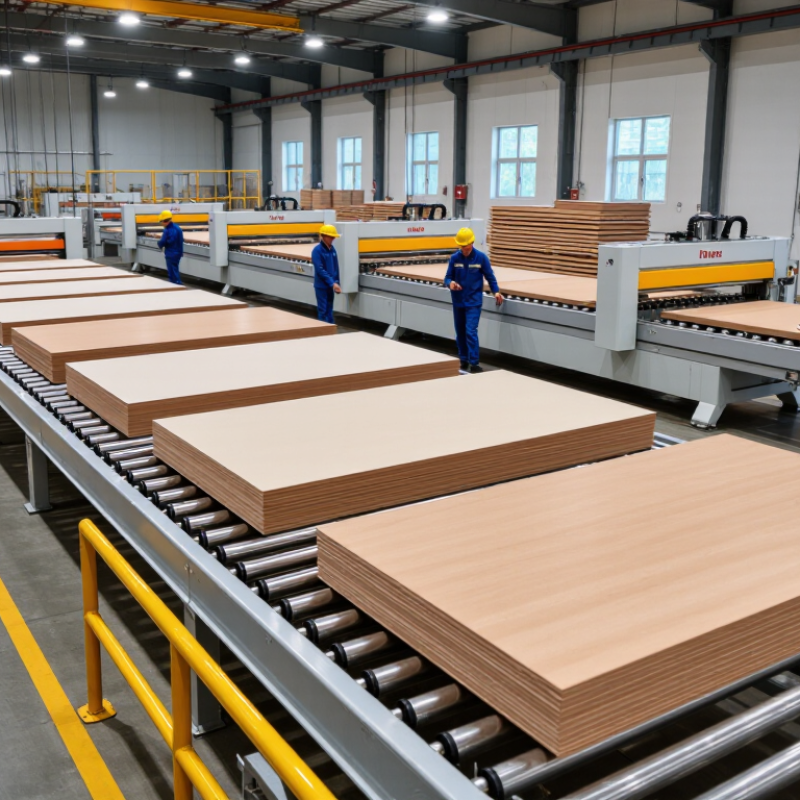
China offers several premium plywood types, each suited to a different job.
Hardwood plywood uses birch, eucalyptus, or poplar veneers. Birch provides a tight face and clean machining. Eucalyptus offers strength and stable layers. Poplar is lighter, but its core quality varies.
FAOSTAT’s 2023 Forestry Production and Trade data records China’s plywood output above 100 million cubic metres, confirming its deep manufacturing capacity. The FAO and UNECE Forest Products Annual Market Review also identifies China as a dominant panel-products producer.
Large output does not guarantee premium quality. That point matters. I would request recent laboratory reports, not only factory brochures. Check EN 13986, GB/T standards, or project-specific requirements. Ask for emission classification, adhesive type, core species, moisture content, and batch traceability.
A practical inspection includes weighing sheets, checking corners, and viewing the cut edge under bright light. Small voids can become expensive failures. Supplier audits still matter, because specifications may change between batches.

Where to Buy the Best Premium Plywood in China?
Key Quality Standards for Evaluating Plywood Suppliers
Finding premium plywood in China requires more than comparing prices. Experienced buyers inspect supplier facilities, production records, and quality controls before placing large orders. A reliable supplier should provide clear product specifications, recent laboratory reports, and traceable batch numbers. Factory location helps, but manufacturing discipline matters more. Ask for sample panels with matching thickness, veneer grade, and core structure. Small differences can become costly during installation.
Examine the plywood core carefully. Voids, overlaps, and uneven joints may weaken the panel. Check surface smoothness, edge sealing, moisture content, and thickness tolerance. Formaldehyde emissions and adhesive performance also need independent testing. Request documents from recognized laboratories, not only internal inspection sheets. Confirm whether test results match the actual shipment. I once trusted an attractive sample too quickly. The delivered panels showed wider thickness variation. That mistake changed my buying process.
Tips: Inspect samples in daylight. Measure several points. Test the edges. Ask difficult questions. A dependable supplier welcomes audits and explains rejected-panel procedures. Do not rely on polished catalogs alone. Visit the factory when possible, or appoint an independent inspector. Premium plywood should perform consistently, not merely look impressive in photographs.
China’s leading plywood manufacturing regions offer different strengths. Linyi, in Shandong Province, has a dense supplier network and wide product selection. Buyers can compare core materials, adhesive grades, face veneers, and production capacity within a short distance. The region suits projects requiring flexible specifications and steady volume.
Pizhou, in Jiangsu, is well known for poplar-based plywood and refined panel processing. Its lighter boards often suit furniture, interior decoration, and packaging applications. Guangxi provides strong eucalyptus resources and supports panels with consistent structural performance. During factory visits, I check veneer thickness, panel flatness, edge sealing, and moisture readings. A polished showroom is not enough. Some suppliers still need better batch tracking and clearer quality records.
Tips: Request recent test reports, production samples, and a written inspection standard. Confirm formaldehyde emission limits for your destination market. Ask how logs are sourced and dried. Visit the pressing line if possible. Small defects can appear after cutting, not during a quick warehouse review. Compare several factories, because the lowest quotation may hide thinner veneers or unstable glue performance.
Finding premium plywood in China begins with verifying the manufacturer, not trusting polished photographs. The FAO Global Forest Resources Assessment 2020 reported 4.06 billion hectares of forest worldwide, making wood origin and traceability important purchasing factors. Ask each factory for forest-source documents, production licenses, test reports, and recent export records. Names and addresses should match across every document.
A reliable manufacturer should explain its core process clearly. Request details about veneer thickness, adhesive type, hot-press temperature, sanding tolerance, and moisture control. For structural panels, compare test results with applicable standards such as EN 13986, EN 314, or ASTM requirements. Independent laboratory testing is safer than relying only on factory certificates. Check bonding strength, formaldehyde emissions, density, warping, and screw-holding performance. A small sample can reveal uneven layers, rough edges, or weak glue lines.
The FAO Forestry Production and Trade database shows how significant global panel production has become, but volume does not prove quality. Visit the mill when possible. Look for calibrated equipment, labeled veneer stacks, clean pressing areas, and records that follow each batch. I would also place a trial order before signing a large contract. It may feel inefficient. It is cheaper than discovering delamination after installation. No checklist is perfect; even experienced buyers can overlook changing raw-material sources or inconsistent moisture readings. Require batch photos, sealed samples, and pre-shipment inspection records.
How to Find and Verify Reliable Plywood Manufacturers
This 100-point buyer verification framework prioritizes product testing, quality consistency, factory traceability, documentation, and pre-shipment inspection. Confirm that emission tests follow the requirements of the destination market, such as EN 717-1 for E1 classification or applicable North American regulations.
Where to Buy the Best Premium Plywood in China?
Premium plywood is not always the cheapest option. A reliable purchase starts with comparing complete quotations, not only the sheet price. Ask about core species, thickness tolerance, glue performance, sanding quality, and packaging. A quotation should show whether prices include inland transport, port fees, and export documentation. In my experience, a low quote can hide weak packaging or inconsistent grading. That mistake is expensive.
Tips: Request recent production photos and a small sample. Check the veneer layers at the edge. Compare moisture readings, surface repairs, and pallet protection. Confirm the quotation’s validity period because timber prices can change quickly. Do not trust certificates without checking the issuing body and product scope.
Certifications should match your market and application. Look for formal test reports covering emissions, bonding strength, and structural performance when required. Verify certificate numbers through official databases or issuing organizations. Export experience also matters. A capable supplier should explain container loading, fumigation rules, customs paperwork, inspection options, and delivery schedules clearly. Ask for a packing list before production begins. Good communication is measurable: replies should be specific, consistent, and supported by documents. Still, no supplier is perfect. Delays happen, and certificates may cover one product thickness only. Put every agreed detail in writing before payment.
| Supplier Profile | Typical Product Range | Indicative Export Price (USD/m³) | Common Thicknesses | Core and Face Options | Relevant Certifications | Minimum Order | Typical Lead Time | Export Services |
|---|---|---|---|---|---|---|---|---|
| Profile A Premium furniture-grade supplier | Birch-faced plywood, hardwood plywood, furniture panels | $650–$950 | 6, 9, 12, 15, 18, 21, 24 mm | Poplar, eucalyptus, or mixed hardwood core; birch or hardwood face | FSC Chain of Custody may be available; CARB Phase 2 or EPA TSCA Title VI upon specification | 1 × 20-foot container | 25–40 days after deposit and approved sample | Pre-shipment inspection, moisture-resistant packing, fumigated pallets, commercial invoice, packing list, and bill of lading |
| Profile B High-strength construction supplier | Structural plywood, formwork plywood, film-faced panels | $380–$620 | 9, 12, 15, 18, 21, 24 mm | Eucalyptus, poplar, or hardwood core; phenolic film or smooth veneer surface | Product testing may include EN 13986 or project-specific structural testing; emissions documentation available by order | 1 × 20-foot container; mixed specifications subject to approval | 20–35 days after order confirmation | Container loading plans, edge sealing, palletization, third-party inspection coordination, and export documentation |
| Profile C Low-emission interior supplier | Interior plywood, decorative panels, low-formaldehyde panels | $520–$820 | 3, 5, 6, 9, 12, 15, 18 mm | Poplar or hardwood core; birch, oak, walnut, or decorative veneer face | CARB Phase 2, EPA TSCA Title VI, or E1 emission classification may be specified; FSC availability varies by material source | 1 × 20-foot container; sample orders generally available | 30–45 days for decorative or custom-faced panels | Color and veneer matching, sample approval, moisture protection, carton or pallet packing, and export paperwork |
| Profile D Marine and exterior-grade supplier | Exterior plywood, marine-grade plywood, weather-resistant panels | $700–$1,150 | 6, 9, 12, 15, 18, 25 mm | Durable hardwood or okoume-type face; waterproof adhesive options such as phenolic or melamine-urea-formaldehyde | BS 1088 or EN 314 bonding classification may be requested; project testing should be verified before purchase | 1 × 20-foot container | 30–50 days depending on grade and testing requirements | Waterproof packaging, batch traceability, inspection reports, container booking, and destination-port documentation |
| Profile E Cost-efficient mixed-grade supplier | Commercial plywood, utility panels, packaging and general-purpose plywood | $280–$480 | 9, 12, 15, 18, 21 mm | Poplar, mixed hardwood, or eucalyptus core; natural or overlaid surface | Emission and bonding reports available according to destination-market requirements | 1 × 20-foot container; specification consolidation may be possible | 20–30 days for standard products | Basic quality inspection, standard pallet packing, container loading, commercial documents, and freight-forwarder coordination |
Note: Price ranges are indicative export-level estimates in USD per cubic meter and vary according to wood species, grade, adhesive, face quality, order volume, packaging, testing, Incoterms, and destination. Certification availability should be confirmed through valid certificates and current laboratory or factory documentation before purchase.