

China is a major sourcing market for timber windows, but supplier quality varies widely. A polished website cannot show how tightly a frame closes or how evenly its finish covers a corner. Buyers need evidence they can check. This guide examines who the leading Chinese suppliers may be and how to compare them without relying on rankings alone.
The focus is Wooden Window Frames made for residential, commercial, and renovation projects. Useful comparisons include timber species, moisture control, joinery, glazing options, coatings, production capacity, and export experience. Ask for product drawings, recent project references, and clear specifications. A physical sample can reveal rough edges, uneven paint, or joints that look sound in photographs but feel loose in hand. Small details matter.
Reliable suppliers should explain their quality checks and provide documents that match the products being quoted. Buyers should also confirm packaging, lead times, communication practices, and how changes are handled after approval. These details are easy to overlook. They can affect a project more than a low initial price.
There is no single best supplier for every order. A small custom project may need flexible design support, while a large development may depend on consistent output and dependable delivery. Even careful checks leave some uncertainty. Use this overview as a starting point, then verify each company’s claims against your own specifications, samples, and project requirements.
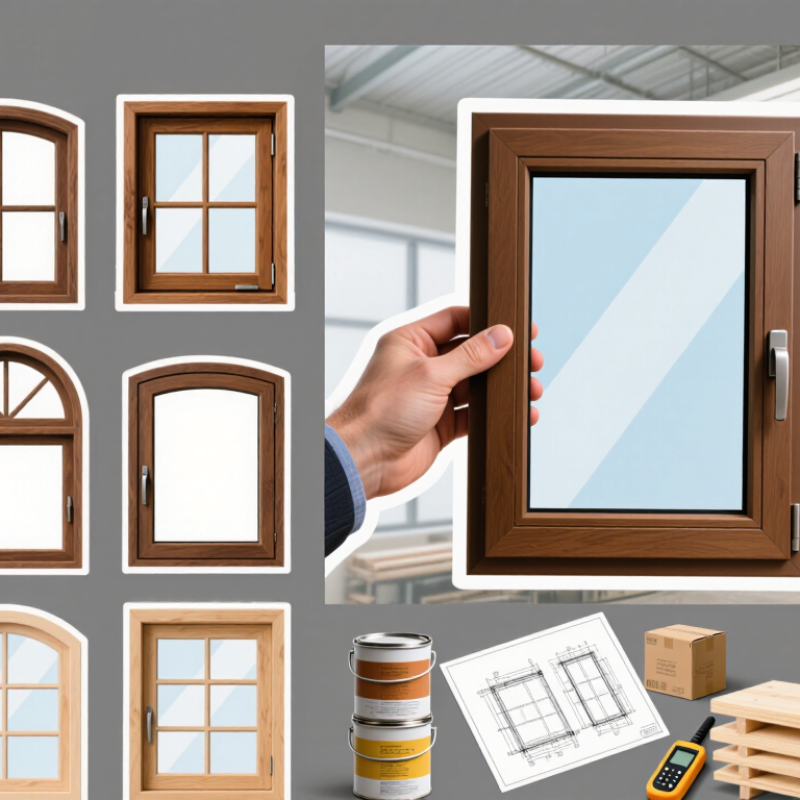
Wooden window frames are commonly classified by timber, glazing, and frame construction. Softwoods such as pine are light and easy to machine; hardwoods such as oak are denser, but species alone does not determine durability. Moisture content, treatment, and joinery matter too. Some frames use laminated or finger-jointed timber to improve dimensional stability. The USDA Forest Products Laboratory’s Wood Handbook explains how wood properties vary with species and moisture. Small differences matter.
Glazing ranges from single panes to double- or triple-glazed units, sometimes with low-emissivity coatings or gas-filled cavities. Frame construction may be solid timber, engineered timber, or timber with protective exterior cladding. Each choice affects insulation, maintenance, and appearance. The U.S. Department of Energy’s Energy Saver guidance estimates that windows account for 25–30% of residential heating and cooling energy use; actual results depend on climate, installation, and the building. A well-specified pane can still underperform if seals are poorly fitted.
Tip: Ask suppliers for timber species, moisture specifications, glazing build-up, and tested whole-window performance—not just frame descriptions. Check sample corners and seals in person. I would not treat “hardwood” as an automatic quality guarantee; it is only one part of the specification.

When comparing wooden window frame suppliers in China, ask for test results for the complete window, not just the timber frame. U-value indicates heat transfer; a lower value generally means better insulation. Check whether the figure refers to the frame alone or the whole window, including glass and spacers. Those numbers are not interchangeable. Ask for the report.
Air leakage shows how much air passes through a closed window under a stated pressure. Compare results tested at the same pressure and using the same units. A low leakage rate can help reduce drafts on a windy day, but installation quality still matters. Even a well-tested window may leak if the opening is poorly sealed.
Water tightness is usually reported as the pressure a window withstands before water penetrates. Look for the test pressure, duration, and any notes about where leakage occurred. Details matter. I may be over-focused on neat figures here: a single rating cannot predict performance in every building. Ask suppliers for dated reports, the tested window configuration, and guidance on suitable exposure. A sheltered courtyard and a high, exposed facade do not face the same rain and wind. Compare like with like, and record any missing test information before shortlisting suppliers.
For wooden window suppliers, EN 12207 air-permeability classes show how much air passes through a closed window under test pressure. EN 12207:2016 classifies results by leakage per window area and opening-joint length; EN 1026 specifies the test method. At 100 Pa, the Class 1 limit is 50 m³/(h·m²), while Class 4 is 3 m³/(h·m²). The corresponding joint-length limits are 12.5 and 0.75 m³/(h·m). Class 4 is the tightest rating.
These figures help compare tested products, but they do not guarantee the same performance after installation. Timber can respond to moisture, and a poorly adjusted latch or uneven seal can create a visible draft near the frame. Small gaps matter. A certificate also applies to the tested specimen and configuration, not every size or installation condition. This is easy to overlook when comparing supplier brochures.
Tips: Ask for the test report, classification, specimen dimensions, and test standard. Check that the quoted class applies to the window configuration you plan to buy. A high class is useful, but careful fitting still matters.
China’s leading wooden-window-frame suppliers are best compared by product focus and production scale, not by a single online ranking. Some specialize in solid-wood frames for restoration and premium homes; others combine timber with aluminum cladding for weather exposure and simpler exterior maintenance. Ask about wood species, moisture content, coating systems, and tested frame drawings. Small details matter: corner joints, sill drainage, and finish samples exposed to sunlight.
Verify scale through annual output, kiln capacity, export share, and third-party inspection records. China’s National Bureau of Statistics reported 998.31 million square meters of completed building floor area in 2023, down 20.4% year over year (2023 real estate development statistics). This signals a changing construction market, not a ranking of frame suppliers. Capacity is not quality. A large plant may suit standardized projects, while a smaller specialist may handle custom profiles better. Output claims alone do not prove reliability.
Tips: Request a recent project reference, pre-coating moisture readings, and written tolerances. Compare quotes for the same opening size and glazing specification. Confirm whether stated capacity means finished, inspected frames or only rough components.
When comparing Chinese wooden window frame suppliers, treat standards claims as evidence to inspect, not badges to trust. EN 14351-1 covers performance characteristics for windows and external pedestrian doorsets; it does not certify a factory’s overall quality. Request the Declaration of Performance and complete test reports. Check the report number, issuing laboratory, test date, product type, opening style, dimensions, hardware, and frame construction. Small differences matter. A report for a fixed window may not support a tilt-and-turn model. Confirm that the stated air permeability, water tightness, and wind resistance classes match the product you plan to order. Verify the laboratory’s credentials and testing scope through independently sourced contact details. A polished PDF alone proves little.
For thermal claims, ISO 10077-1:2017 provides a calculation method for whole-window thermal transmittance, Uw. Request the calculation sheet, not just a headline value. It should identify glazing Ug, frame Uf, glass-edge psi value, areas, and reference dimensions. Compare these inputs with your exact profile, glazing thickness, spacer, and sash layout. Check units and assumptions; a low value may describe another configuration. If a value is calculated, do not present it as laboratory-tested. Ask for a drawing and compare its sections with the report. This check is not foolproof. Documents can still differ from production, so consider a first-article inspection before shipment. Verification takes care.
Supplier assessment matrix: This table provides a practical way to compare suppliers using verifiable product evidence. It does not rank or identify individual companies. Request documents for the exact window system, configuration, and intended market.
| Evaluation Dimension | What the Standards Address | Evidence to Request | How to Verify the Claim |
|---|---|---|---|
| Product and configuration identification | EN 14351-1 covers performance characteristics for windows and external pedestrian doorsets within its scope. Performance evidence relates to defined products and configurations. | Product datasheet identifying the window type, opening style, dimensions, frame and sash materials, glazing, hardware, seals, and intended use. | Check that the model and configuration on each report match the product being quoted. Confirm that any differences, such as size, glazing, or opening type, are covered by the report or its permitted scope. |
| Performance declaration and traceability | EN 14351-1 is a product standard used to declare relevant window performance characteristics. EU documentation and marking obligations depend on the applicable Construction Products Regulation rules and the product’s scope. | Where applicable, request the Declaration of Performance, product identification, declared characteristics, and supporting assessment or test documentation. | Compare product identifiers and declared values across the declaration, technical datasheet, test reports, and order documents. Verify that the documentation applies to the supplier’s offered product, not merely to a similar design. |
| Thermal transmittance (Uw) | ISO 10077-1:2017 specifies a calculation method for the thermal transmittance of windows, doors, and shutters. A window calculation generally accounts for frame and glazing areas, their thermal transmittances, and the glazing-edge contribution. | A calculation report stating the Uw value, product dimensions, calculation inputs, glazing build-up, frame data, and relevant edge-of-glass data. | Check that the reported Uw is for the complete window and stated size, not just the frame (Uf) or glazing (Ug). Review the inputs and confirm they correspond to the quoted frame, glass, spacer, and configuration. |
| Air permeability | EN 14351-1 includes air permeability as a window performance characteristic. Testing and classification are commonly associated with EN 1026 and EN 12207, respectively. | Test report identifying the tested specimen, test method, pressure conditions, and classification. | Confirm the report identifies the same opening type and relevant frame, seals, and hardware. Check the classification and test details rather than relying on an unqualified “airtight” claim. |
| Watertightness | EN 14351-1 includes watertightness performance. EN 1027 is a commonly used test method, with classification under EN 12208. | Test report stating the specimen details, test method, exposure conditions, and achieved classification. | Match the tested specimen to the offered design and installation orientation. Check that the report records the test result and classification; do not treat a general water-resistance statement as a rated result. |
| Resistance to wind load | EN 14351-1 includes resistance to wind load as a performance characteristic. Testing and classification are commonly associated with EN 12211 and EN 12210. | Test report showing specimen dimensions, test pressures, deflection or other reported results, and classification. | Compare the tested dimensions and construction with the proposed window. Ask how the reported result applies to larger or differently configured units. |
| Wood species, treatment, and finish | EN 14351-1 and ISO 10077-1:2017 do not, by themselves, establish a supplier’s wood species, coating durability, or sourcing claims. | Wood-species declaration, material specification, treatment and coating details, and relevant product-specific inspection or test records. | Ensure the documents identify the actual wood and finish offered. Treat sustainability, durability, or treatment claims as separate claims requiring their own supporting evidence. |
| Report authenticity and scope | Standards-based claims are meaningful only when the evidence is traceable to the applicable product, test or calculation method, and report scope. | Complete reports, including issuing laboratory or responsible technical party, report number, date, specimen description, methods, and results. | Contact the issuing organization through independently verified contact details where possible. Check report completeness, dates, product identity, and any stated limitations or exclusions. |
| Supplier comparison outcome | Neither standard is a supplier ranking system. EN 14351-1 addresses product performance characteristics; ISO 10077-1:2017 provides a thermal-transmittance calculation method. | A comparison sheet recording the same product configuration, declared or calculated values, report references, and unresolved evidence gaps for each bidder. | Compare suppliers on a like-for-like basis. Record “not provided” or “not verified” where evidence is missing instead of treating an unsupported claim as a confirmed performance result. |