

7 Best Dinosaur Fossil Suppliers for Global Buyers

Buying Dinosaur Fossils internationally requires more than comparing photographs and prices. Provenance comes first. A polished vertebra may look impressive, yet its scientific and legal value depends on documented excavation, ownership, export, and import records.

Reliable market statistics remain limited. The U.S. Geological Survey’s Mineral Commodity Summaries 2024 does not list dinosaur fossils as a standardized commodity category. This gap makes supplier claims difficult to compare. It also explains why advertised prices can vary sharply between similar-looking specimens. In this guide, seven suppliers are assessed through practical buyer criteria, including authentication, chain of custody, preparation quality, shipping documentation, and after-sales support.

The legal framework matters. UNESCO’s 1970 Convention remains a central reference for preventing illicit cultural-property transfers. National fossil laws can be stricter, especially in countries where fossils belong to the state or require export permits. Buyers should request specimen numbers, locality details, ownership history, and copies of applicable permits. Good suppliers answer clearly. Vague answers are warning signs.

Details reveal quality. Look for stable preparation, visible matrix, repaired areas, and conservation notes. Ask whether a specimen is original, restored, cast, or composite. This guide is not a perfect ranking. Industry data is fragmented, and some commercial information is private. Still, careful comparison can reduce avoidable risks and support responsible collecting. Authenticity is important. Documentation is decisive.
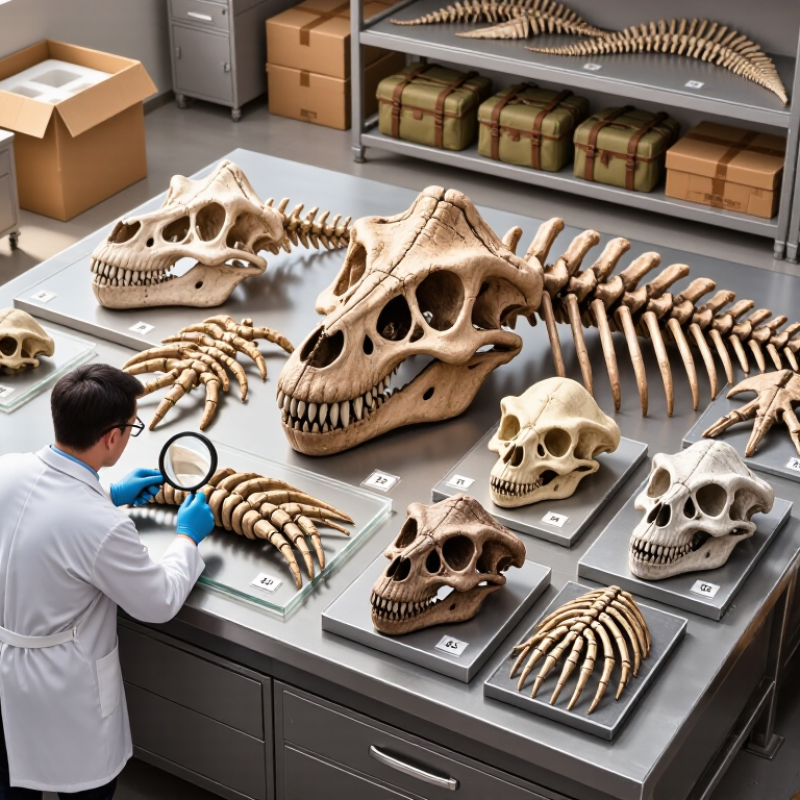
7 Best Dinosaur Fossil Suppliers for Global Buyers

Global Dinosaur Fossil Trade: 7 Supplier Types and 3 Buyer Priorities

7 Best Dinosaur Fossil Suppliers for Global Buyers

Global Dinosaur Fossil Trade: 7 Supplier Types and 3 Buyer Priorities

Global buyers usually work with seven supplier types: licensed excavators, scientific institutions, museum deaccession programs, specialist dealers, preparation laboratories, auction houses, and private collection brokers. Each offers different evidence, pricing, and service quality. The U.S. Geological Survey’s 2024 Mineral Commodity Summaries does not list dinosaur fossils as a standardized commodity. This matters. Buyers cannot rely on transparent market benchmarks.

Provenance should come first. Request excavation records, ownership history, export documents, and high-resolution photographs. The 1970 UNESCO Convention remains a key reference for cultural property movement, although national rules vary widely.

Condition is another priority. A repaired femur may look impressive under bright lights but hide major structural weakness. Ask for restoration reports, preparation notes, and independent scientific opinions.

Logistics also deserves attention. Oversized crates, humidity changes, and fragile matrix can create unexpected costs. Professional suppliers should explain packing methods and insurance terms clearly.

Tips: Compare at least three written offers. Check every claim against documents, not excitement. A 2024 TEFAF Art Market Report estimated global art sales at about 65 billion dollars in 2023, yet dinosaur fossils remain a far less transparent niche. That comparison is imperfect, but useful. Public prices may reflect rarity, preparation quality, or publicity rather than scientific value. Some suppliers also provide excellent specimens but weak paperwork. Buyers should pause there. Reliability is not only about the fossil.


Legal Due Diligence Under the 1970 UNESCO Convention and Export Laws

7 Best Dinosaur Fossil Suppliers for Global Buyers

Legal due diligence should guide every supplier comparison. The 1970 UNESCO Convention supports cooperation against the illicit import, export, and transfer of cultural property. Its treaty database lists more than 140 States Parties, creating different obligations across markets. Dinosaur fossils may also face national heritage rules, mining controls, customs requirements, and protected-species legislation. Rules vary sharply.

Ask each of the seven suppliers for a complete ownership file. It should show the excavation location, discovery date, chain of custody, export permit, and import documentation. Request specimen photographs before payment. Check that catalogue numbers match invoices and shipping records. A reputable supplier should explain whether the fossil is complete, restored, cast, or partly reconstructed. That detail matters. The International Council of Museums’ ethical guidance stresses documented provenance and lawful acquisition. INTERPOL’s public reporting also identifies cultural-property trafficking as a continuing international concern, although fossil-specific global statistics remain limited. This evidence gap requires extra caution, not less.

Use written contracts with return rights and compliance warranties. Confirm customs classification with the destination authority. Independent review by a paleontology specialist and a trade lawyer can expose mismatched dates or vague ownership claims. I would not rely on a certificate alone. Some documents look official but prove little without verifiable issuing records. Mistakes happen, especially when sellers use “old collection” as the entire history. A careful buyer should pause there.

7 Best Dinosaur Fossil Suppliers for Global Buyers - Legal Due Diligence Under the 1970 UNESCO Convention and Export Laws

Buyer-screening framework: The entries below describe legally relevant supplier channels rather than named companies. Dinosaur fossils may be subject to national ownership, excavation, export, import, customs, cultural-property, and site-protection laws. The 1970 UNESCO Convention is implemented through the laws of individual states and does not automatically prohibit every fossil transaction.
Rank Supplier Channel Typical Legal Strength Documents a Global Buyer Should Require Export-Control Check UNESCO 1970 Due-Diligence Relevance Recommended Risk Level
1 Government-authorized public auction or deaccession program Usually the strongest provenance route when the selling authority has documented ownership and disposal authority. Official sale record, inventory number, chain-of-title file, specimen description, export authorization, tax invoice, and written confirmation that the item was legally deaccessioned. Confirm whether the exporting country requires a cultural-property permit, archaeological-fossil permit, customs declaration, or ministry approval. Public documentation can support good-faith verification, but the buyer should still check whether the source country has implemented UNESCO-related import and restitution controls. Low, subject to permit verification
2 Licensed commercial fossil excavator Potentially reliable where excavation, land access, ownership, and commercial sale are expressly permitted by local law. Business registration, excavation license, landowner consent, field locality, excavation dates, excavation reports, photographs, specimen inventory, and title documents. Verify that the permit covers fossil removal and export, not merely geological research or domestic excavation. A documented chain of custody helps demonstrate that the specimen was not removed from protected land or illicitly exported before the relevant national rules took effect. Moderate
3 University or research-institution surplus sale Often supported by scientific records, but institutional ownership and disposal rules must be confirmed. Institutional authorization, accession and deaccession records, locality data, scientific identification, donor restrictions, provenance statement, and export paperwork. Check whether the specimen was received under a grant, loan, repatriation agreement, or permit that restricts commercial transfer or international shipment. Research records may establish provenance, but they do not replace required export or import permits. Moderate
4 Established specialist dealer with pre-1970 documentation Can be acceptable when the dealer provides a continuous, independently checkable ownership history. Prior invoices, auction records, collection labels, dated photographs, customs records, expert reports, seller warranty, and a written provenance declaration. Do not treat age alone as proof of lawful export. Confirm the laws in force at the time and place of excavation and each later export. The 1970 date is a due-diligence benchmark, not a universal safe harbor. National laws may protect fossils excavated or exported before or after that date. Moderate to high
5 Licensed domestic dealer in the source country Local licensing may establish business legitimacy but does not automatically prove title to every fossil offered. Dealer license, specimen-level provenance, supplier invoices, excavation permit, ownership evidence, export eligibility statement, and identity verification. Obtain written confirmation from the relevant competent authority when national law requires a cultural-property or fossil-export certificate. Ask whether local law treats fossils as state property, protected heritage, scientific material, or privately transferable property. High until independently verified
6 International auction intermediary May provide transaction transparency, but the intermediary may not guarantee title or lawful export. Full lot history, consignor identity where legally available, seller warranties, condition report, prior customs records, title guarantee, and dispute-resolution terms. Identify the actual country of origin, dispatch country, transit countries, and destination-country import requirements before bidding. An auction listing is not equivalent to a UNESCO certificate or government export permit; obtain primary-source records. High
7 Online marketplace or private cross-border seller Usually the weakest channel because seller identity, title, locality, and export history may be difficult to verify. Verified identity, company registration, specimen-specific provenance, dated ownership records, lawful-export confirmation, invoice, and return or indemnity terms. Never rely solely on platform descriptions, informal declarations, or “legal to sell” statements. Confirm customs classification and permits independently. Insufficient provenance may expose the buyer to seizure, restitution claims, customs penalties, or inability to prove good-faith acquisition. Very high; avoid without independent verification
Minimum purchase file
Specimen identification, locality, ownership history, excavation authority, export permit, commercial invoice, packing list, and transport records.
Important legal distinction
UNESCO Convention obligations are carried out through national law. A permit from one country does not automatically satisfy the import rules of another country.
Red flags
Vague locality, missing seller identity, pressure to pay privately, inconsistent dates, altered labels, unusually low prices, or refusal to provide export records.

Scope note: This table is an operational screening aid, not a legal opinion. Buyers should obtain advice from qualified counsel and confirm requirements with the competent cultural-property, geological, customs, and environmental authorities in both the source and destination countries. Fossils are generally outside the ordinary scope of CITES, but other national conservation, heritage, customs, and protected-site laws may still apply.

Authenticity Assessment Through 4 Professional Provenance Indicators

For global buyers comparing seven dinosaur fossil suppliers, provenance deserves more attention than polished photographs. The 2024 Art Basel and UBS Global Art Market Report valued 2023 global art sales at approximately US$65 billion. Fossils are a smaller market, but the same lesson applies: documented origin protects value and trust.

Use four professional provenance indicators.

The first is a precise excavation locality, including formation, region, and discovery date.

The second is an uninterrupted chain of custody, supported by invoices, permits, and export records.

The third is scientific documentation, such as specimen measurements, preparation notes, and clear photographs before restoration.

The fourth is independent review by a qualified paleontologist, museum curator, or recognized scientific institution.

ICOM’s Code of Ethics also emphasizes documented ownership and due diligence for cultural objects.

A certificate alone is not enough. I still treat a clean scan as weak evidence.

Tips:

Ask for the original locality record, not only a seller’s summary. Compare bone texture, matrix, and repair lines under magnification. Request an independent condition report. Check whether names, dates, and specimen numbers match across every document.

The Society of Vertebrate Paleontology’s ethical guidance supports scientific transparency, yet private records can remain incomplete. That is the uncomfortable part. Missing information does not automatically prove wrongdoing, but it should reduce confidence and affect the purchase decision.

Comparing 7 Suppliers by Fossil Grade, Preparation Quality, and Lead Time

A reliable dinosaur fossil supplier should be judged by evidence, not dramatic photographs. Fossil grade means completeness, preservation, scientific identification, and documented provenance. Ask for close images of teeth, joints, matrix, and repaired areas. A high-grade specimen should show stable surfaces and limited reconstruction. “Museum quality” is not a measurable standard. That phrase needs questioning.

Preparation quality often separates a valuable fossil from a fragile display piece. Request the preparation method, stabilization materials, repair history, and a condition report. Experienced preparators can reveal fine bone texture without over-cleaning the specimen. I would also request images under angled light. They expose filled cracks and modern restoration. Mistakes happen, even with skilled work.

Lead time includes more than workshop preparation. It covers inspection, packing, customs paperwork, and transport coordination. The World Bank’s 2023 Logistics Performance Index assessed 139 economies across six logistics dimensions, including tracking and timeliness. Use those indicators to assess the shipping route, but do not treat them as a supplier guarantee. UNCTAD’s Review of Maritime Transport 2024 reported 2.4% growth in seaborne trade during 2023, while route disruptions still affected schedules. A credible supplier should provide a written production window, packaging specification, insurance terms, and delay procedure. Compare seven quotations in one table. Then check every claim against documents, not enthusiasm.

Global Purchasing Risks: Customs, Insurance, Certification, and 30-Day Checks

7 Best Dinosaur Fossil Suppliers for Global Buyers

Global buyers should examine customs readiness before comparing fossil prices. UNCTAD’s Review of Maritime Transport 2023 reports that over 80% of merchandise trade by volume moves by sea. Delays can damage fragile matrix and museum-grade surfaces. The World Bank’s Logistics Performance Index 2023 gathered responses from 4,090 logistics professionals across 139 economies. Customs performance still varies widely. Request a precise commercial invoice, packing list, origin statement, tariff classification, and export documents where required. Do not guess.

Insurance needs equal attention. Standard cargo cover may exclude natural deterioration, poor packing, undisclosed repairs, or inadequate valuation. Swiss Re Institute reported 108 billion dollars in global insured natural-catastrophe losses during 2023. That figure reflects a wider lesson: transport exposure is real, even before a crate reaches customs. Ask for coverage from pickup through final inspection. Confirm deductibles, claim deadlines, packaging requirements, and whether partial damage is covered.

Use a written 30-day acceptance check. Photograph the sealed crate, labels, foam layers, and specimen from every angle. Record weight and visible repairs before opening. Compare the fossil, dimensions, condition, and documents with the purchase agreement. Keep the crate and packing material until acceptance ends. A certificate alone is not proof of sound provenance. Independent review helps, but it is not infallible. Even careful buyers miss small fractures beneath filler. Report discrepancies promptly, preserve evidence, and request a signed resolution. Loose wording creates expensive uncertainty.

7 Best Dinosaur Fossil Suppliers for Global Buyers: 30-Day Purchasing Risk Review

This planning chart assigns a practical verification window to the main purchasing risks. Customs requirements, insurance terms, export permissions, and fossil-provenance rules vary by origin and destination, so buyers should confirm the applicable laws and documents before payment and shipment.

X
We use cookies to offer you a better browsing experience, analyze site traffic and personalize content. By using this site, you agree to our use of cookies. Privacy Policy
Reject Accept

Leave a Message to Download Our Brochure

X