

What Is Fishing Tackle and How Do You Choose It?

FISHING TACKLES are the tools that connect an angler to the water: rods, reels, lines, hooks, and other essentials. The right setup can make a quiet morning at a local pond feel more manageable. A rod that is too stiff, or line that is too heavy, may make casting awkward and bite detection harder. Small choices matter.

Tom Rosenbauer, a longtime fishing educator and author, offers a useful principle, paraphrased here: choose gear for the fish and water, not the label. That means considering your target species, fishing location, and technique before buying equipment. A beginner fishing from a dock may need a different rod and reel than someone casting from a boat. There is no single perfect kit. Conditions change, and so should your choices.

Start with the basics. Check that the rod feels comfortable in your hand, the reel operates smoothly, and the line suits your intended fishing style. Then consider practical details, such as storage, durability, and budget. More gear does not always mean better preparation. Easy to overlook. Even experienced anglers can carry items they rarely use. This guide explains what fishing tackle includes and how to choose it with care, while leaving room to adjust as your skills and fishing conditions develop.
What Is Fishing Tackle and How Do You Choose It?

What Fishing Tackle Includes and What It Is Used For

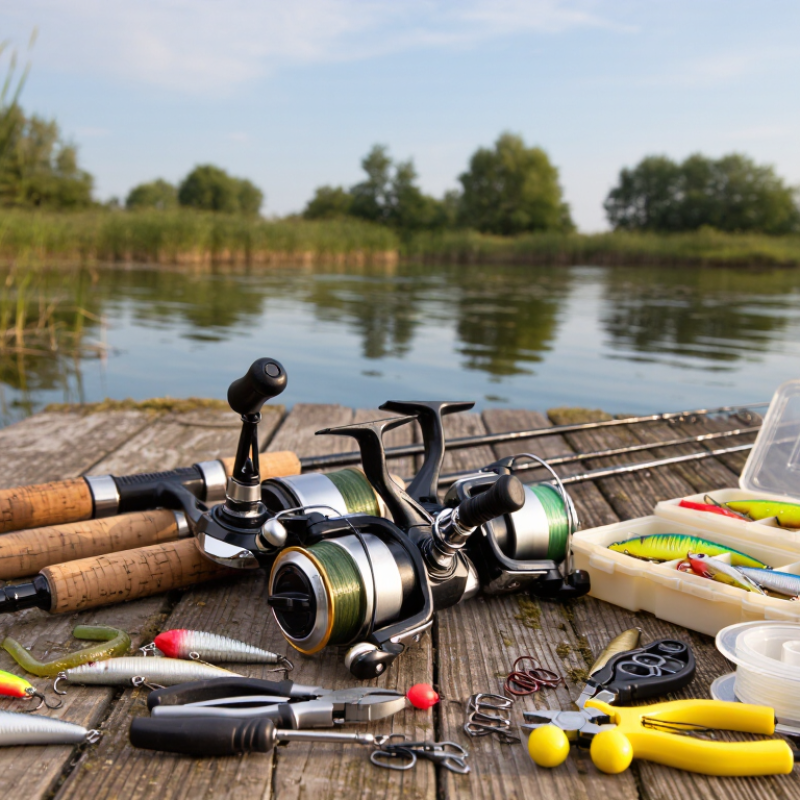
Fishing tackle is the equipment used to present bait, manage a fish, and bring it safely to shore. The basic setup usually includes a rod, reel, and fishing line. The rod helps cast and control the line; the reel stores line and retrieves it. Hooks hold bait or lures, while weights help them sink. A float can keep bait at a chosen depth and signal a bite.

Small parts matter. Swivels can reduce line twist, and a leader adds a section of line between the main line and hook. Lures imitate prey with movement, shape, or color; natural bait offers scent and texture. Pliers help remove hooks, and line cutters make quick changes easier. A measuring tool can help check a catch before keeping it. The right mix depends on the fish, water depth, current, and cover.

Choose tackle that suits the conditions, not just the biggest fish you might encounter. A light line and small hook may work well in clear, calm water, while heavier gear can help around weeds or submerged branches. Match the rod and reel to the line’s recommended range, and check knots before casting. There is no perfect setup. Even careful choices sometimes need adjustment when wind, bait, or fish behavior changes. I may still carry more tackle than I use, which adds weight without always adding value.


The Main Types of Fishing Tackle and Their Functions

Fishing tackle is the working set of equipment used to present bait, control a fish, and land it safely. Rods provide reach and leverage; reels store line and help manage tension. The line connects angler to fish, while hooks hold bait or artificial lures. Lures imitate prey through movement, color, or vibration. Natural bait can be useful when fish respond poorly to moving lures. Small details matter. Sinkers take bait deeper, floats show subtle bites, and swivels help reduce line twist.

The 2023 Special Report on Fishing, produced by the Outdoor Foundation and the American Sportfishing Association, reported that 57.7 million Americans fished in 2022. That broad participation reflects many fishing styles, not one ideal setup. Match rod power, line strength, and hook size to the target fish and local conditions. For example, a small float and light line can reveal a gentle bite in a quiet pond. A heavier sinker may suit deeper water or moving currents. Check knots and hooks before casting; damaged line can fail without warning. Even careful choices are imperfect. Wind, depth, and fish behavior can change quickly, so adjust one item at a time and notice what happens.

What Is Fishing Tackle and How Do You Choose It? — The Main Types of Fishing Tackle and Their Functions

Tackle Type Common Components Main Function Typical Use What to Consider When Choosing
Rod Blank, handle, reel seat, guides, and tip Provides leverage for casting, controlling the line, and playing a fish. Matched to techniques such as casting lures, float fishing, or fishing from shore or a boat. Consider rod length, power, action, material, and the line and lure ratings. Longer rods can help with casting distance; shorter rods can offer more control in confined spaces.
Reel Spool, handle, drag system, and line guide or bail, depending on reel type Stores and retrieves line; the drag allows line to release under tension to help reduce break-offs. Spinning reels are commonly used for general-purpose casting; baitcasting reels offer direct spool control; fly reels store fly line and provide retrieval and drag. Match the reel to the rod, target fish, line type, and fishing method. Check capacity, retrieve rate, drag range, and ease of operation.
Fishing Line Monofilament, fluorocarbon, or braided line Connects the angler to the hook or lure and transmits force when setting the hook and retrieving a fish. Monofilament is stretchy and versatile; braid has a small diameter for its strength and little stretch; fluorocarbon is often used for leaders and can be less visible underwater than many lines. Choose breaking strength and diameter for the target species, cover, and tackle. Also consider stretch, abrasion resistance, visibility, and compatibility with the reel.
Hooks Point, barb or barbless bend, shank, and eye Hold bait or a lure and help secure a fish when it takes the offering. Used with natural bait, soft-plastic lures, and many other presentations. Hook patterns vary by bait, technique, and fish size. Select a size and pattern that suit the bait or lure and the target fish. A hook should be sharp, appropriately strong, and legally permitted where you fish.
Weights and Sinkers Split shot, egg sinkers, bank sinkers, and other weights Add casting weight and help take bait or a rig to a desired depth or keep it near the bottom. Used in bottom rigs, drifting presentations, and other methods where extra weight is needed. Use only as much weight as needed for casting and depth control. Account for current, water depth, line strength, snag risk, and local restrictions.
Floats and Bobbers Fixed floats, slip floats, and bite indicators Support or suspend bait at a chosen depth and provide a visible indication of a bite. Useful when presenting bait above weeds or the bottom, or when monitoring a suspended bait. Match float size and buoyancy to the bait and weight. Choose a fixed or adjustable setup based on the required fishing depth and casting conditions.
Leaders and Swivels Short sections of line, snap swivels, and barrel swivels A leader can provide a more suitable line section near the hook or lure; a swivel can join line sections and help reduce line twist. Used where abrasion, clear water, lure changes, or rotating lures make a separate terminal section useful. Match leader material, length, and strength to the fishing situation. Use swivels only when helpful, and ensure knots and connections are strong and properly tied.
Artificial Lures Hooks and a body designed to imitate or attract prey; examples include spoons, plugs, jigs, and soft plastics Attract fish through movement, appearance, vibration, or sound, and present hooks without natural bait. Different lure types are designed for particular depths, speeds, and retrieve styles. Consider target species, water clarity, depth, current, forage, and the action you can comfortably produce. Check that hooks are suitable and secure.
Terminal Rigs Combinations of hooks, weights, floats, leaders, and swivels Arrange the bait or lure, weight, and line connection to present an offering in a chosen way. Examples include bottom rigs, float rigs, and simple bait rigs; the setup varies with the method and fishing conditions. Keep the rig appropriate to the target fish and environment. Check local rules on hook limits, bait, and permitted rig components.
Landing Net Handle, frame, and mesh netting Helps bring a fish within reach and lift or guide it from the water. Useful when fishing from shore, a boat, or a dock, especially when a fish is difficult to lift by hand. Choose a frame large enough for the expected fish and a handle suited to the fishing location. Knotless or rubber-coated mesh can help reduce damage to fish and tangling.

How Fishing Tackle Components Work Together

Fishing tackle works as a connected system, not a pile of separate tools. The rod’s power and action affect how it casts and handles a fish; the reel must balance with that rod and hold suitable line. Line strength, stretch, and diameter then influence casting distance and how clearly a bite comes through. Small details matter. A heavy lure on a light rod can feel clumsy, while thick line may hinder a small lure’s movement. Match the setup to the fish, water, and technique you expect to use.

The 2024 Special Report on Fishing, produced by the Outdoor Foundation and the Recreational Boating & Fishing Foundation, reports that 57.7 million Americans aged six and older fished in 2023. That broad participation reflects many kinds of fishing, so there is no single ideal setup. For a lightweight lure, try a compatible rod, reel, and line rather than changing just one component. Then check that the hook suits the lure and intended fish. I still find it easy to focus too much on the rod. A practical check is to cast a few times and notice whether the lure travels smoothly, the line behaves cleanly, and the rod feels balanced in hand.

Factors to Consider When Choosing Fishing Tackle

Fishing tackle includes the rod, reel, line, hooks, and lures used to catch fish. The best choices depend on where you fish and what you hope to catch. A small stream calls for different gear than a windy shoreline. Think about the target fish’s size, the water depth, and your fishing method before buying anything. A balanced setup is easier to cast and control.

Match rod power and action to the fish and lure weight. A light rod can feel responsive with small lures, while heavier tackle handles larger fish better. Check that the reel’s drag works smoothly and that the line suits the conditions. Clear water may call for less visible line; weeds or rough structure may require a tougher option. Avoid choosing the strongest gear by default—it can make small fish less enjoyable to land.

Fit matters. Beginners sometimes overlook comfort, but a heavy outfit becomes tiring after an hour. There is no perfect setup for every trip, and personal preference can change with practice.

Tips: Read the rod’s recommended line and lure ranges. Test the outfit in your hands before purchasing. Keep a simple spare hook and line. After a trip, rinse gear used in saltwater and let it dry fully.

Matching Tackle to Fishing Methods and Conditions

Matching tackle to fishing methods and conditions starts with the water and the fish you expect to encounter. A light spinning setup suits small lures and calm ponds, while a sturdier rod helps cast heavier rigs in wind or current. Choose line strength to match likely fish, nearby snags, and lure weight—not simply the biggest number available. Hooks should fit the bait: an oversized hook can make a small worm look awkward. Small details matter.

Tips: Check wind and water clarity before choosing a lure. Use brighter colors in stained water and more natural shades in clear water. Keep spare weights and hooks in a dry pouch.

For bottom fishing, enough weight to hold position can make bites easier to notice. In moving water, use only what you need; excess weight may snag or dull the feel. When casting around weeds or submerged branches, a slightly heavier line can provide more control, though it may be more visible in clear water. I sometimes bring too many lure styles and still reach for the same one. That’s a useful reminder to change one variable at a time, such as depth or retrieve speed, and observe what happens. Conditions shift, so a setup that worked yesterday may need adjustment today.

What Is Fishing Tackle and How Do You Choose It?

Compare typical line-strength ranges for several common fishing methods. Use them as starting points, then adjust for target species, cover, and local conditions.

Line strength is only one part of a balanced setup: match your rod and reel to the method, and choose tackle suited to the fish and conditions. These ranges are general guidelines, not fixed rules.

Article Source:

X
We use cookies to offer you a better browsing experience, analyze site traffic and personalize content. By using this site, you agree to our use of cookies. Privacy Policy
Reject Accept

Leave a Message to Download Our Brochure

X