

10 Best Marble Floor Tiles for Every Budget
Marble brings a quiet richness to a room: soft veining, cool surfaces, and subtle changes in color under different light. Yet the right tile is not chosen by appearance alone. Price, finish, size, and maintenance all affect how well a floor suits daily life. A polished white tile may brighten a small entry, while a honed finish can feel calmer underfoot. Small details matter.
This guide to the 10 best marble floor tiles for every budget compares options from accessible styles to premium natural stone. If you are searching for Floor Tiles Marble, consider where the tile will go before focusing on its pattern. A busy kitchen may need more frequent cleaning and careful sealing; a guest bathroom may have different demands. Marble is porous, so spills can leave marks if they sit too long, and finishes vary in slip resistance. Check product specifications and care instructions before buying, rather than relying on a photo or showroom sample alone.
We also look at tile dimensions, color consistency, and the practical costs that can sit beyond the box price, including installation and ongoing care. Samples help. View them in your own lighting, and remember that natural veining will not match perfectly from tile to tile. That variation is part of marble’s appeal, though it can surprise buyers expecting a uniform floor. No single choice fits every home. The best pick balances budget, appearance, and the effort you are willing to give it.
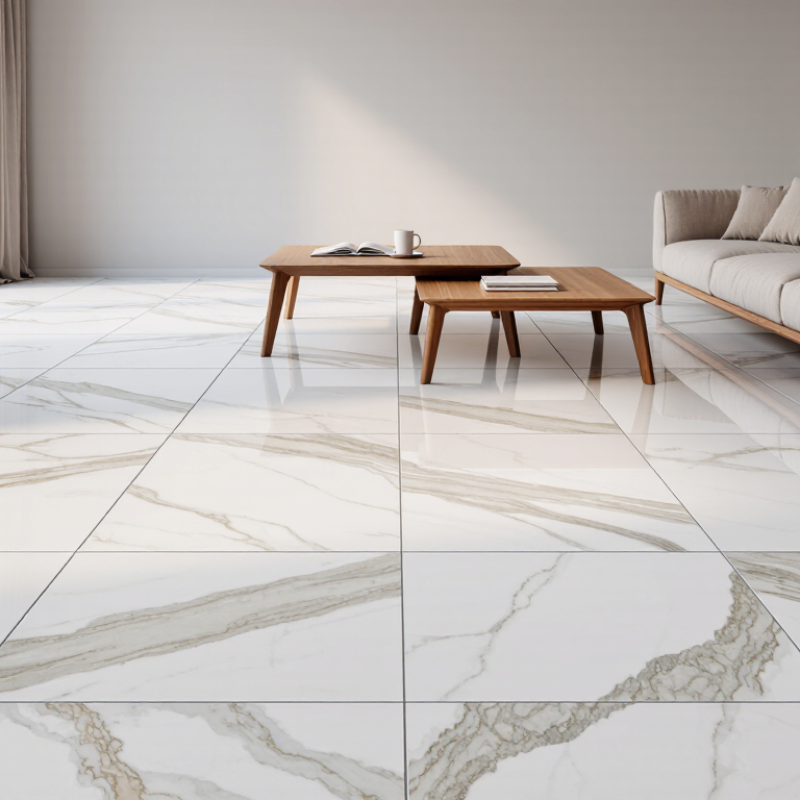
Table of Contents [Hide]
Understanding Marble Floor Tiles, Stone Types, and Finishes
Marble begins as limestone changed by heat and pressure, so its color and veining vary naturally. White varieties may show soft gray lines, while green, beige, or darker stones bring stronger contrast. Even tiles cut from one block can differ. Veins vary. Check several pieces together before choosing a layout, and inspect the actual batch when possible. A small sample rarely shows the full pattern. Marble also contains pores and can react to acidic spills, such as lemon juice or vinegar. Sealing helps limit staining, but it does not make the stone stain-proof.
The finish changes both appearance and daily care. Polished marble reflects light and makes veining look vivid, yet water can make it slippery. Honed marble has a softer, matte surface that may disguise small scratches, though it can still absorb spills. Tumbled finishes feel gently textured and suit relaxed interiors, but their uneven surface can collect dirt. Not every room suits it. For floors near showers or entrances, compare samples underfoot and ask about slip performance when wet. Tile size and grout width matter, too: narrow grout lines create a quieter look, while wider joints can emphasize each tile. One detail is easy to underestimate: marble needs routine care, and the right finish cannot remove that responsibility.
10 Best Marble Floor Tiles for Every Budget — Understanding Marble Floor Tiles, Stone Types, and Finishes
| Marble type | Typical appearance | Indicative tile price (USD/ft²) | Common finishes | Practical notes for floors | Budget range |
|---|---|---|---|---|---|
| Carrara | Light gray to white ground with soft gray veining | $5–$15 | Honed, polished, tumbled | A widely available classic; like other calcite marbles, it can etch from acidic spills and benefits from sealing. | Budget-friendly |
| Crema Marfil | Warm beige or cream with subtle tan veining | $6–$18 | Honed, polished, brushed | Its warm color suits traditional and neutral interiors; tile variation is natural, so inspect multiple pieces before installation. | Budget-friendly |
| Botticino | Beige to light tan with fine, often understated markings | $7–$20 | Honed, polished | A restrained neutral option; a honed surface generally appears less glossy and may make minor wear less noticeable. | Budget-friendly to mid-range |
| Emperador Dark | Deep brown with lighter cream or tan veining | $8–$22 | Honed, polished, brushed | Adds a dark, dramatic look; dust and pale debris may show more readily on darker surfaces. | Mid-range |
| Nero Marquina | Black ground with contrasting white veins | $10–$30 | Honed, polished | A high-contrast choice; check samples for vein pattern and use a slip-conscious finish in wet areas. | Mid-range |
| Danby marble | White to pale gray with gray or gold-toned veining | $12–$30 | Honed, polished | A marble quarried in Vermont, USA; availability and price depend on selection, tile size, and finish. | Mid-range to premium |
| Arabescato | White or light gray ground with bold, swirling gray veins | $15–$40 | Honed, polished | Striking veining can make each tile look different; layout planning helps create a balanced overall pattern. | Premium |
| Calacatta | White background with prominent gray and sometimes gold-toned veining | $20–$60+ | Honed, polished | A premium, highly variable stone; appearance and cost can differ substantially between selections and tile lots. | Premium to luxury |
| Statuario | Bright white ground with strong gray veining | $25–$70+ | Honed, polished | A sought-after decorative marble; reserve extra material for cuts and future repairs when matching a distinctive pattern. | Luxury |
| Thassos White | Bright white appearance, often with little visible veining | $20–$55 | Honed, polished | Known for a clean, luminous look; verify that the selected lot has the color and consistency you want. | Premium to luxury |
Price ranges are indicative U.S. material costs per square foot for marble tile only; they exclude installation, shipping, taxes, and subfloor preparation. Actual prices vary by grade, origin, thickness, size, finish, and supplier. Marble is a natural, acid-sensitive stone; use a suitable stone sealer and cleaner, and consider honed or textured finishes where slip resistance is important.